

I grew up on a farm. That means when something broke, you didn’t call someone — you figured it out. There was no YouTube tutorial. No Google. Just the problem in front of you, your hands, and the expectation that you’d find a way.
That upbringing shaped everything. The work ethic. The problem-solving instinct. The refusal to give up when something doesn’t work the first time. Farm kids don’t wait to be told how. They just start.
But the farm gave me more than a work ethic. It gave me mentors.

My mom gave me hard work and passion. My dad taught me how to properly answer a phone and take a detailed message before cell phones existed. And my grandfather Cleon — who ran Milliman’s Feed Service out of the back porch of our family home for over 50 years — taught me what real customer service looks like.
Cleon treated every person who came through that back door with kindness and respect. He was generous to a fault — he’d never say no to a kid selling candy bars or help fund a 4-H’er’s feed bill until after the fair. He kept meticulous records and could run an adding machine like a musical instrument. His legs were crushed in an accident in the 1960s and doctors told him he’d be lucky to live to 65. He made it to 80 — grateful for every single day.
A lot of what’s in this list came from watching him. I just didn’t know it at the time.
I carried that into Michigan State, where I studied Agribusiness Management. One textbook from those years I never sold back — Strategic Management of Agribusinesses by Dr. Chris Peterson. Every other book went back at the end of the semester. That one I kept. It’s in a box somewhere, but the thinking inside it never left. Strategy isn’t just a course you pass. It’s a lens you carry.
I started playing with websites in 1999. On April 5, 2001, I sold my first one. That client is still with me today. I think about that a lot — 25 years of trust, built one project and one relationship at a time.
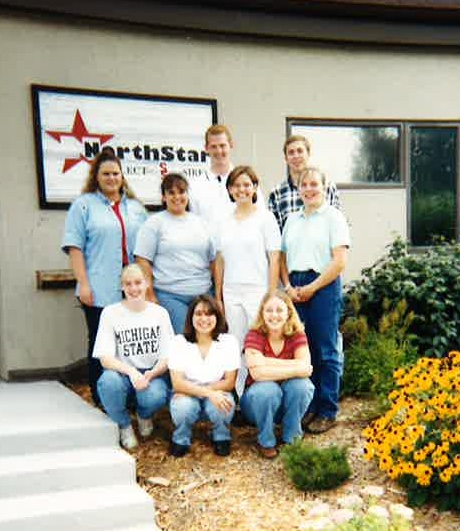
What got me here wasn’t a perfect plan. It was curiosity. Stubbornness. Showing up. And being willing to learn from anyone — including the marketing agency that reviewed one of my early websites and caught an H1/H2 tagging error I’d completely missed. I didn’t get defensive. I built a checklist. That one correction changed everything about how we work.
Around that same time, a client asked me: ‘How do we show up when someone searches ______?’ I didn’t have a great answer. So I went and found one. That question launched years of studying how people actually search — their behavior, their language, their intent — and building websites that meet them there. I’ve been chasing that question ever since.
(And yes — I didn’t have YouTube growing up. But I sure use the heck out of it now.)
I’ve been scared. I’ve taken on projects I wasn’t sure I was ready for. I’ve lost big ones and won ones that stretched me beyond what I thought I could do. I’ve made mistakes and been lucky enough to have colleagues who caught them and were kind about it. Every one of those moments is in this list somewhere.
So here are 25 things I know to be true after 25 years.
THE FOUNDATION: INTEGRITY & PEOPLE
1. Relationships are everything.
Business is personal. I know that’s not what they teach in business school — but I’ve never found it to be otherwise. My first client from 2001 is proof. We believe in relationships over transactions. Always.
2. Integrity is doing the right thing when no one is watching.
(Thanks, C.S. Lewis.) It’s your most valuable asset. If you say you’ll do it — do it. Your reputation is built one kept promise at a time, and it’s lost the same way.
3. Work hard and be nice to people.
On the farm, this wasn’t a philosophy. It was just Tuesday. I’ve never found a business strategy that beats it. Not one.
4. Give grace.
You never truly know what someone is walking through behind the scenes. A client who goes quiet. A vendor who drops the ball. A teammate having a hard week. Grace has served me — and this business — better than impatience ever has.
5. You can learn something new from everyone.
Treat every person you meet as a potential teacher. Some of my best lessons came from people I least expected — a client who asked a question I couldn’t answer, a colleague who caught my mistake, a stranger in a meeting who said the thing no one else would.
THE STRATEGY: WORK SMARTER
6. Know who you serve.
Strategy 101: you cannot be everything to everyone. Niche down to speak up. The more specific you are about who you help and how, the more clearly the right people can find you — and trust you. I learned this in a textbook at Michigan State. I’ve relearned it every year since.
7. Build for the 80%, not the 20%.
Don’t over-engineer your business — or your website — for the edge cases. Focus on the majority. Solve the most common problem really, really well. Simplicity is a strategy, and a good one.
8. Promote the work you want more of.
You attract what you put out there. If you don’t enjoy doing something, stop marketing it. This took me longer to learn than I’d like to admit. But once I did, the work got better and so did the clients.
9. Don’t take on too many projects at once.
Quality suffers when quantity rules. I learned this the hard way. A full calendar isn’t always a healthy business. Protect your capacity so you can serve people well — not just fast.
10. The devil is in the details.
Excellence lives in the small things others overlook. It’s why we have checklists. It’s why that H1/H2 correction 20+ years ago still matters to me. The details aren’t extra — they’re the job.
THE COMMUNICATION: CLARITY WINS
11. Words matter — and fewer is usually better.
Stop the fluff. Be clear, be direct, get to the point. On websites, in emails, in proposals. Clarity isn’t just good writing. It’s a competitive advantage.
12. Clear communication is kindness.
Ambiguity breeds frustration. Say exactly what you mean — in your contracts, your timelines, your expectations. The most respectful thing you can do for someone is not make them guess.
13. Collaboration sparks the best ideas.
We don’t have to go it alone. The best solutions I’ve ever found came from putting heads together — with a client who knew their audience better than I did, a team member who saw the problem from a different angle, a colleague who asked the right question.
14. Teach what you know.
Hoarding knowledge doesn’t protect your business. It limits it. Share generously. Every honest answer, every useful resource, every blog post — it builds trust faster than any ad ever will.
15. ‘No’ is a complete sentence.
You don’t always owe an explanation. Guard your time. Every time I said yes to the wrong project, I was quietly saying no to the right one. It took me years to really own this — but it changed everything when I did.
THE MINDSET: GROWTH & RESILIENCE
16. Every problem has a solution.
This is farm logic. When the equipment breaks at planting time, you don’t panic — you figure it out. I’ve applied that same mindset to every client crisis, every technical failure, every season that didn’t go as planned. Take a breath. We’ll figure it out.
17. Believe in your own value.
I’ve taken on projects I wasn’t sure I was ready for. I was scared. I didn’t have a big portfolio. But I dug in, grew into it, and realized I had real value to offer — even before I had all the proof. Confidence isn’t arrogance. It’s showing up anyway.
18. Stay hungry and curious.
Curiosity built this business. A client asked how they could show up in search results, and I didn’t have the full answer — so I went and found it. That one question sent me down a path I’ve been walking for over 20 years. Never stop asking questions. The moment you do, you start becoming obsolete.
19. You don’t have to know everything to offer value.
You just need to be one step ahead of the person who needs your help. I didn’t grow up with the internet. I didn’t have YouTube. But when I needed to learn something, I found a way — and that instinct to figure things out has been worth more than any credential.
20. Give yourself space to create.
The best ideas rarely happen at a desk. They happen on walks, in the car, in the quiet moments you actually protect. Thinking is working. Build it into your schedule and guard it like an appointment.
THE BALANCE: FAITH & LIFE
21. Life is too short for nonsense.
Drama is a distraction. Focus on what matters and let the rest go. Not every fire needs your water. Not every loud thing is urgent. Twenty-five years teaches you to tell the difference.
22. Work hard, but don’t lose yourself.
Hard work is a value I’ll never apologize for. But hustle culture is a trap. There’s a version of busy that feels productive and quietly costs you everything else. I’ve been there. I don’t go back.
23. Keep your priorities straight.
God. Family. Business. In that order. Always. This isn’t a tagline — it’s the filter I run decisions through, especially the hard ones. When I’m off-balance, it’s usually because I’ve gotten these out of order.
24. It is a privilege to serve.
When I started seeing my work as service — not just a service — everything changed. How I price. How I communicate. How I handle hard conversations. It’s not just a job. It’s an honor.
25. Pray about everything.
Love God. Serve others. Stay humble.
This lives in my email signature. It’s not a lesson I arrived at — it’s the one I return to, every single day. It’s where I started, and it’s what I want to keep building toward. After 25 years, I think it’s the whole thing.
Thank you to every client, colleague, teammate, and stranger who has trusted me, challenged me, taught me, and stayed with me. Here’s to whatever comes next.